

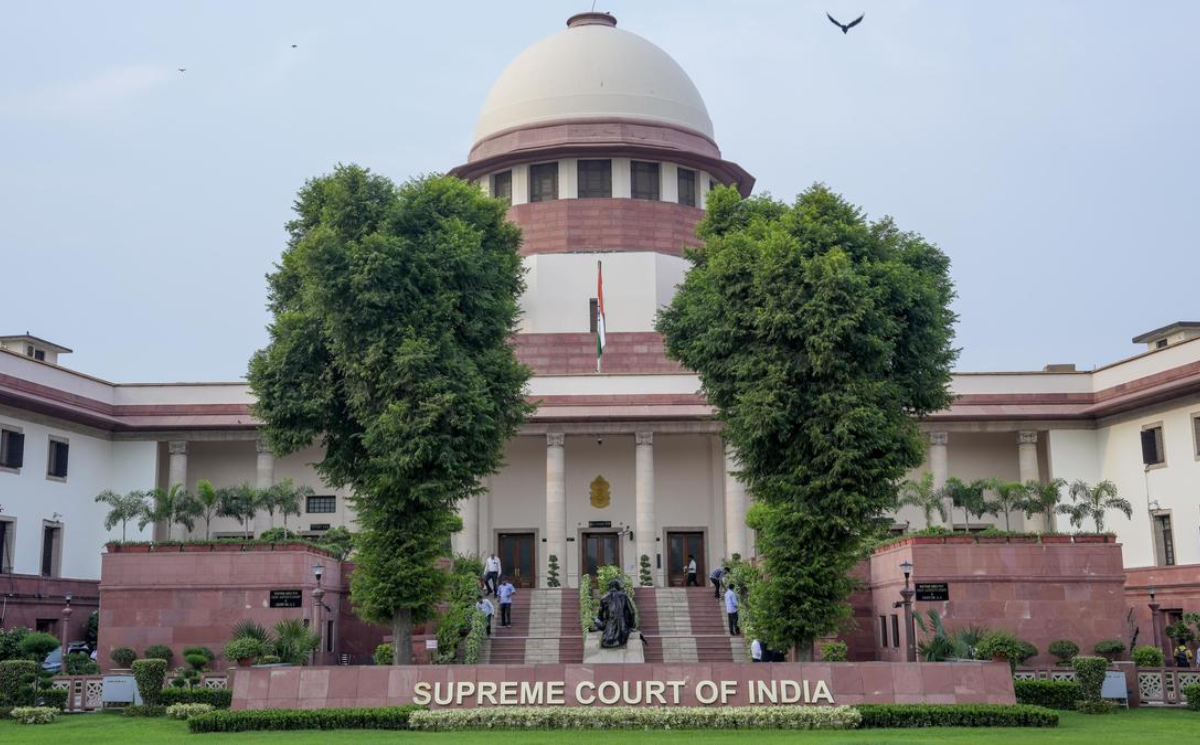
The Supreme Court on Friday urged the rival communities in Manipur to work together on a practical plan to reopen national highways that have been blocked amid renewed tensions between Naga and Kuki groups.
A Bench headed by Chief Justice of India Surya Kant, along with Justices Joymalya Bagchi and V. Mohana, said the prolonged road blockades were causing serious difficulties for ordinary people, especially by disrupting the supply of essential goods.
Stay Connected · Headline8
Get breaking news instantly — follow our official channels
More than 260 people have been killed and thousands displaced since ethnic violence broke out between the Meitei community in the Imphal Valley and the Kuki community in the surrounding hill areas in May 2023.
“Blocking of highways is not serving anybody’s cause. Hardship is faced by everyone,” the court observed, urging the groups to consider the involvement of an independent agency or another platform to help resolve the issue.
The Bench directed the Kuki Women Organisation for Human Rights (KWOHR), a wing of the Kuki Organisation for Human Rights Trust (KOHUR), and the International Meitei Organisation, which was allowed to intervene in the matter, to submit details of the blocked roads and suggestions for reopening them within two weeks.
Key Highways Remain Affected
The blockades have raised concerns over the movement of essential supplies into the landlocked state.
NH-2, which links Imphal with Dimapur in Nagaland, is one of Manipur’s major supply routes. NH-37, connecting Imphal with Jiribam and further to Assam, is another crucial route used to transport goods into the state.
During the hearing, senior advocate Anand Grover, appearing for KWOHR, claimed that Kuki militants had removed their blockades but alleged that Naga militants had not done the same. He also questioned the state government’s handling of the situation.
The counsel representing the International Meitei Organisation, however, opposed the plea and alleged that the Kuki community was responsible for the blockades.
SC Warns Against Forced Removal
The Supreme Court also cautioned that any attempt to forcibly clear the highways could potentially lead to fresh violence.
The Bench noted that issuing directions without considering the ground situation could create another law-and-order problem. It therefore encouraged both sides to focus on finding a solution that would allow all major highways to reopen, rather than seeking relief only for their respective communities.
“We want a situation where both of you actively work on ground to ensure that all highways are open,” the court said.
The Bench ultimately stressed that the matter should not turn into a blame game. Instead, it asked the parties to explore practical solutions, including the possible involvement of an independent agency or another neutral platform.
The two sides now have two weeks to submit their proposals, with the court seeking a workable solution that can restore the movement of goods and reduce the hardships faced by people across Manipur.