
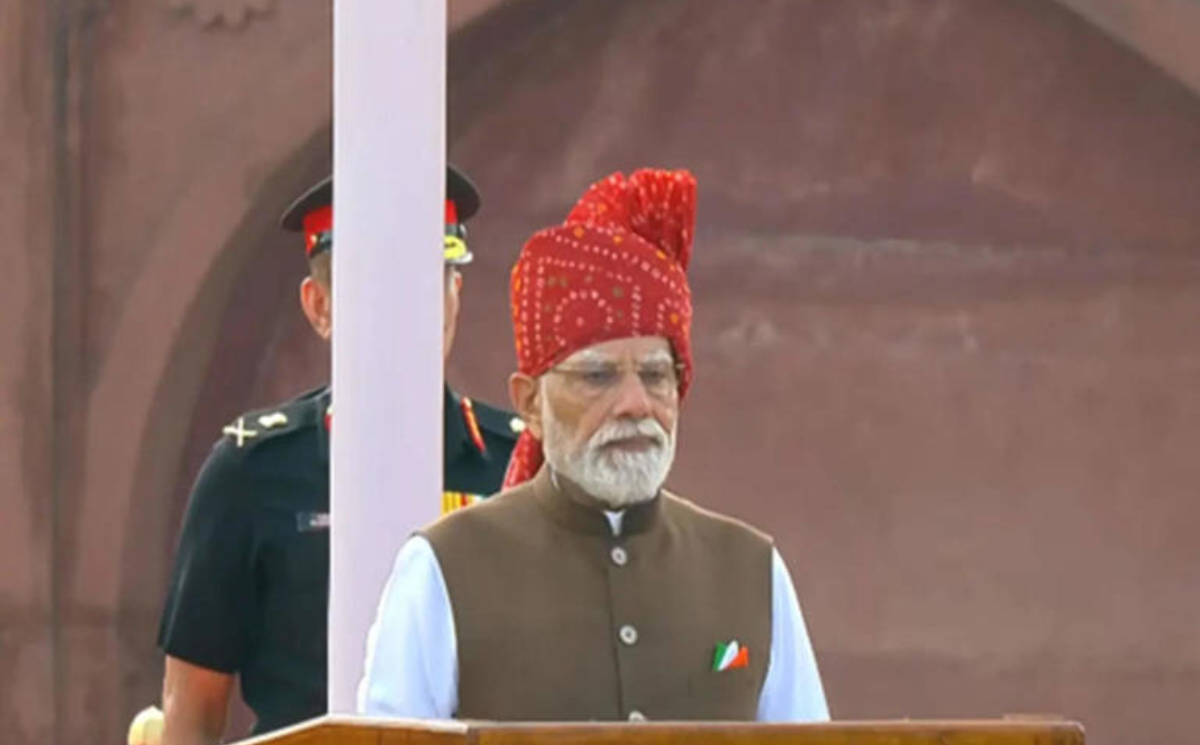
Prime Minister Narendra Modi’s Independence Day address from the Red Fort on Saturday covered a wide range of issues, from youth empowerment and manufacturing to national security and India’s long-term development goals. The 2026 speech was also notable for being his shortest Independence Day address in four years.
The Prime Minister outlined his vision of “Saptadhara”, or seven streams of power, while announcing several initiatives aimed at strengthening India’s economy, supporting young people and expanding opportunities in education, innovation and research.
Stay Connected · Headline8
Get breaking news instantly — follow our official channels
One of the key announcements was a plan to provide free online coaching for various competitive examinations. Modi said the initiative was intended to ease the financial pressure on poor and middle-class families, many of whom spend substantial amounts on private coaching.
He urged young Indians to pursue their ambitions while assuring them that the government would work to ensure access to resources. Highlighting the country’s innovation ecosystem, he pointed to a ₹1 lakh crore mechanism designed to support ideas, research and entrepreneurial capabilities.
Modi Calls for Greater Youth Participation in Census
The Prime Minister also appealed to young people to participate actively in the ongoing Census exercise. He called on the youth to volunteer their time and take greater responsibility in helping complete the process.
Modi argued that greater youth participation would strengthen the exercise and allow young Indians to contribute directly to an important national process.
Strong Message on Naxalism and Maoist Violence
National security was another major theme of the address. Modi said Naxalism and Maoism had caused widespread destruction and deprived generations of young people of opportunities.
He claimed that Left-wing extremism had lost much of its strength and was nearing its end, while reiterating the government’s commitment to eliminating Naxalite and Maoist violence completely.
The Prime Minister also spoke about India’s transformation over the past decade, saying the country had moved away from a slower pace of development and was now progressing more rapidly across several sectors.
Push for Manufacturing, Semiconductors and Critical Minerals
Modi called for greater momentum in domestic manufacturing and highlighted sectors such as semiconductors and critical minerals as strategically important for India’s future.
His remarks came amid the government’s broader push to expand domestic production, reduce dependence on imports and establish India as a stronger player in global supply chains.
Rahul Gandhi and Mallikarjun Kharge Skip Red Fort Ceremony
Congress leaders Rahul Gandhi and Mallikarjun Kharge did not attend the Independence Day celebrations at the Red Fort for the second consecutive year.
Their absence comes after a controversy over Gandhi’s seating arrangement during the 2024 ceremony. Gandhi had been seated in the fifth and penultimate row of the VIP section, prompting criticism from the Opposition, which described the arrangement as disrespectful.
The government had defended the seating plan, saying changes had been made to accommodate Olympians attending the event. Gandhi subsequently stayed away from the Red Fort celebrations in 2025 as well.
Vande Mataram Played at Red Fort for First Time
This year’s celebrations also marked a significant cultural milestone as Vande Mataram was played from the ramparts of the Red Fort for the first time.
The national song was performed by the band after Modi arrived at the historic venue and before he hoisted the national flag.
The 2026 celebrations also marked 150 years of Vande Mataram, adding special significance to the performance.
Around 27,000 Attend Independence Day Celebrations
Nearly 27,000 people, including students, young innovators, entrepreneurs and interns, were invited to participate in the 80th Independence Day celebrations.
The event was held under heightened security, with Delhi Police implementing extensive measures around the Red Fort and other sensitive locations.
According to officials, a multi-layered anti-terror security plan was put in place, while more than 1,000 CCTV cameras equipped with AI-based video analytics were deployed to monitor the area.
Multiple rounds of screening and security checks were conducted for visitors, with authorities seeking to maintain tight security while minimising inconvenience for attendees.
Traffic Restrictions Across Delhi
The Independence Day programme also led to traffic restrictions and diversions across central and north Delhi.
The Delhi Traffic Police announced restrictions between 4 am and 10 am, advising commuters to plan their journeys in advance and use designated alternative routes.
Several major roads were affected, including Netaji Subhash Marg, Lothian Road, S.P. Mukherjee Marg, Chandni Chowk Road, Nishad Raj Marg, Esplanade Road and parts of Ring Road between Rajghat and ISBT Kashmere Gate.
With Modi’s address combining economic priorities, youth-focused initiatives, national security and cultural symbolism, the 2026 Independence Day celebrations reflected the government’s emphasis on building a stronger and more self-reliant India while preparing the country for its next phase of growth.
(Inputs from Hindustan Times)
Edited by: Moonmoon Borah