

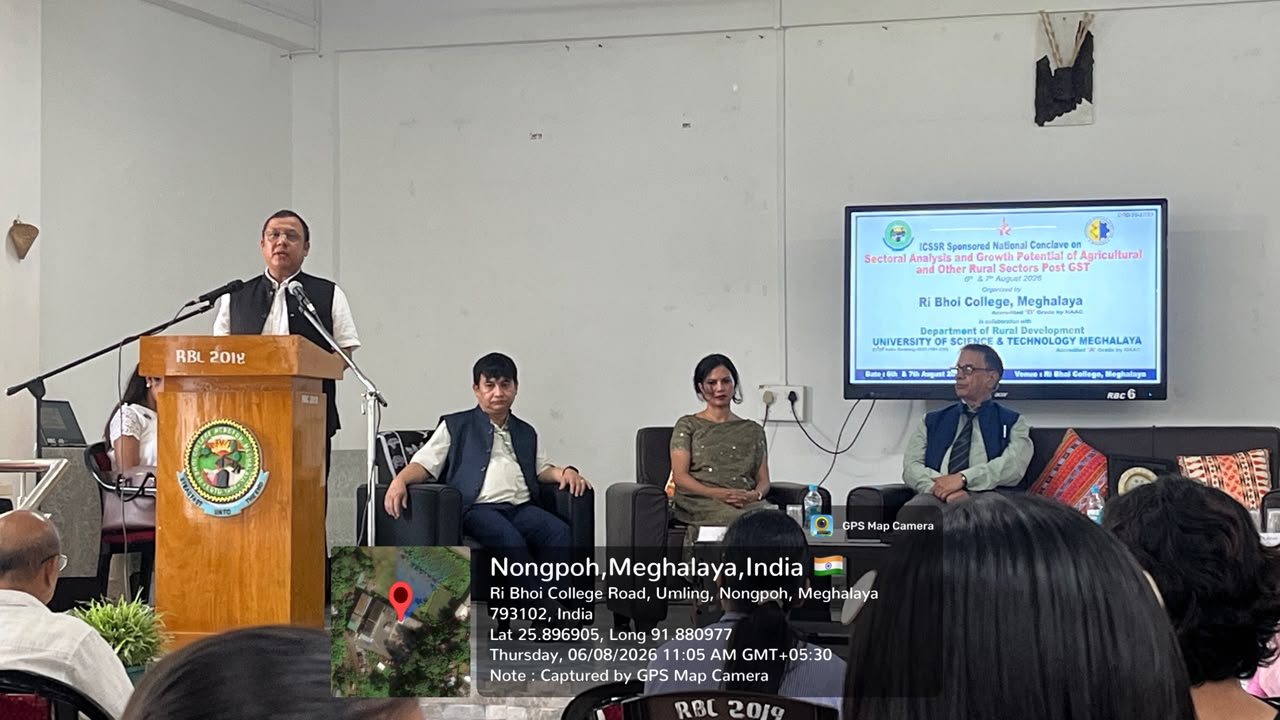
Ri-Bhoi College recently hosted an ICSSR-sponsored National Conclave focusing on the growth prospects of agriculture and other rural sectors in the post-GST landscape. The event was organised in collaboration with the Department of Rural Development, University of Science and Technology Meghalaya (USTM).
The conclave brought together academics, researchers, subject experts and students from institutions across India for discussions on the evolving agricultural sector, rural development and the broader rural economy following the implementation of the Goods and Services Tax (GST).
Stay Connected · Headline8
Get breaking news instantly — follow our official channels
The inaugural session was attended by Prof. G. D. Sharma, Vice Chancellor of USTM, who delivered the inaugural address. Shri Mathew Kenneth Makdoh, Member of the Khasi Hills Autonomous District Council, attended the event as the Chief Guest.
The keynote address was delivered by Prof. Sujit Sikdar from the Department of Commerce, USTM. The programme opened with the traditional ceremonial lighting of the lamp, followed by a welcome address from Dr. Elizabeth Kharkongor, Principal of Ri-Bhoi College.
A series of technical sessions formed the core of the conclave, featuring scholars and experts from USTM, North-Eastern Hill University, Gauhati University, Assam University, Nagaon University, Assam down town University, Jaihind College, Mumbai, and several other academic institutions.
The discussions examined a range of issues related to agriculture, rural development, commerce and economic transformation, with particular attention to the opportunities and challenges facing rural sectors under the GST regime.
The conclave also provided an important platform for academic exchange and interdisciplinary dialogue. Participants discussed the need for evidence-based policy measures, sustainable approaches to rural development and stronger research collaboration to enhance the resilience and growth potential of India’s agricultural and rural economy.
The organisers said the academic engagement would contribute to a broader understanding of the structural changes taking place in India’s rural economy and help facilitate informed discussions on policies aimed at strengthening rural livelihoods and economic development.