
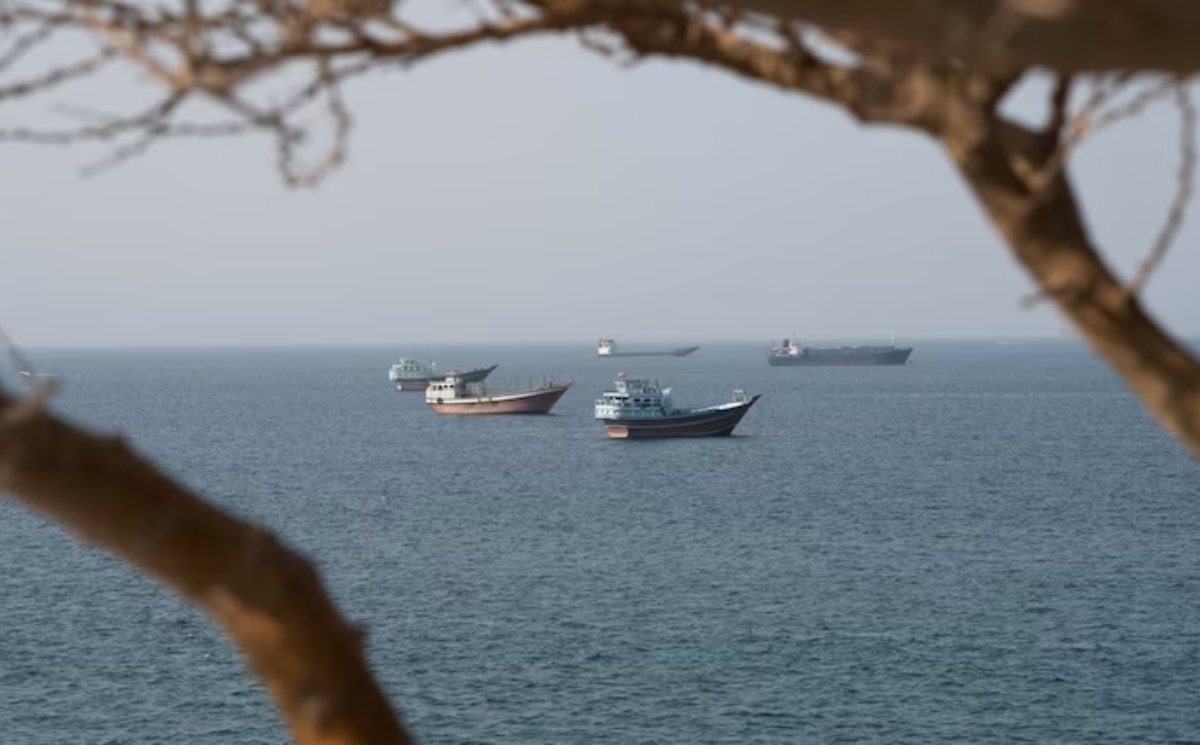
The Strait of Hormuz, a crucial gateway for global oil shipments, is emerging as a contested arena in the ongoing Iran war, with both Tehran and Washington claiming the upper hand over navigation. However, recent shipping data suggests the reality on the water may be far more complicated.
More than 80% of vessels passing through the strait over the past two weeks have reportedly used a shipping route along the Omani side, according to data from tracking firm Kpler cited by CNN. The route is authorised by the United Nations but has been strongly opposed by Iran.
Stay Connected · Headline8
Get breaking news instantly — follow our official channels
The growing use of the Omani route could indicate that Tehran is no longer able to exercise the same level of control over maritime traffic that it had earlier in the conflict.
“It increasingly looks like Iran has at least partially lost control of the strait,” said Homayoun Falakshahi, head of crude oil analysis at Kpler, according to CNN.
Ships increasingly avoid Iran-backed route
The shift is particularly notable because the Omani route had reportedly witnessed almost no shipping activity a month earlier.
Iran has claimed authority over navigation through the Strait of Hormuz and has attacked vessels attempting to use routes close to Oman’s northern coast. Despite those risks, an increasing number of ships are now opting for the Omani side, with some relying on the presence of US naval forces for protection.
The change could also undermine Tehran’s efforts to collect transit charges from vessels passing through the waterway.
Iran had sought to impose fees on ships using the strait, but the growing use of an alternative route has made such efforts more difficult to enforce.
“Iran’s request to collect tolls is something that most Middle East folks don’t want to do and haven’t been doing,” said Dan Pickering, founder and chief investment officer of Pickering Energy Partners, as cited by CNN.
Oil tankers adopt riskier strategies
The changing shipping patterns have also prompted major Gulf oil producers to alter their crude transportation strategies.
Kuwait, Saudi Arabia and the United Arab Emirates have reportedly chartered Very Large Crude Carriers (VLCCs) to transport oil from the Persian Gulf through the Strait of Hormuz. The crude is then transferred to other tankers outside the immediate danger zone in the Gulf of Oman.
Some tankers are taking additional precautions to reduce the possibility of being targeted by Iran.
Several vessels have reportedly switched off their transponders for extended periods, sometimes for weeks, creating what is known as “dark traffic.” With identification signals disabled, conventional tracking systems find it harder to determine the exact volume of oil moving through the waterway.
Satellite imagery and other surveillance technologies can still detect some of these vessels, but the absence of transponder signals makes monitoring significantly more difficult.
Washington claims oil flows remain substantial
The United States has meanwhile argued that oil movement through the region remains higher than some conventional shipping estimates indicate.
US naval forces are operating in and around the Strait of Hormuz, and President Donald Trump has claimed that the US has “total control” of the waterway. On Tuesday, Trump also said he would like to take control of Hormuz and shared a map of the strait describing it as “new US territory.”
US Energy Secretary Chris Wright said last week that oil shipments through the strait, combined with cargoes rerouted around it, amounted to around 15 million barrels per day over a one-week period.
That figure is considerably closer to the approximately 20 million barrels per day that passed through the region before the war. Washington has used the data to argue that Iran has failed to completely shut down the strategic waterway despite threats and attacks.
However, the figures do not necessarily establish that the US has unrestricted control over the strait.
A shifting balance, not complete control
Iran continues to possess the ability to threaten commercial vessels and disrupt maritime traffic, while oil flows remain below pre-war levels. At the same time, the increasing number of ships choosing the Omani route indicates that Tehran is facing difficulties in enforcing its preferred terms of passage.
The situation has therefore created a more complicated balance of power.
Iran can still raise the risks for commercial shipping, forcing vessels to change routes, switch off tracking systems or seek protection from naval forces. But its ability to prevent ships from using alternative routes appears to have weakened.
Meanwhile, the United States has expanded its naval presence in the area and is providing commercial vessels with an alternative security umbrella. Yet that presence alone does not mean Washington has complete control over the waterway.
Iran-Oman talks add another layer
The maritime situation is also being shaped by separate discussions between Iran and Oman over navigation through the Strait of Hormuz.
The two countries share coastlines along the strategic waterway and have been discussing measures aimed at restoring freedom of navigation. The talks are taking place without direct US participation, a development that has reportedly frustrated Trump.
Whether any agreement between Tehran and Muscat will significantly alter shipping patterns or the wider balance of power remains uncertain.
(Inputs from INDIA TODAY)
Edited by: Moonmoon Borah