

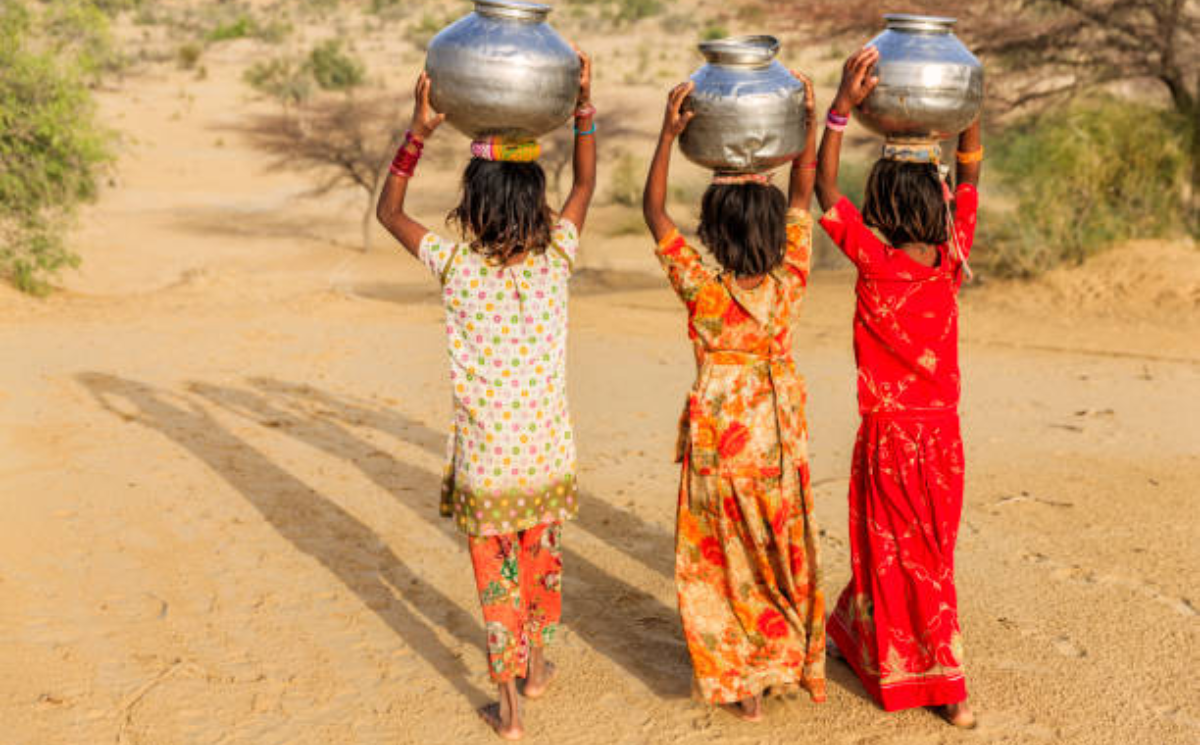
India’s gender gap in unpaid domestic work does not suddenly emerge after marriage or motherhood. It begins taking shape during childhood, with girls gradually assuming a growing share of household responsibilities while boys’ contribution remains comparatively low.
Data from the Time Use Survey shows that at around six years of age, boys and girls spend almost the same amount of time on domestic and caregiving activities — roughly five minutes a day. But the gap widens sharply from around age 10.
Stay Connected · Headline8
Get breaking news instantly — follow our official channels
By the age of 10, girls spend about 15 minutes a day on household work. The figure rises to around 75 minutes at age 15 and reaches roughly 124 minutes by age 17.
The trajectory continues into adulthood. Women’s time spent on domestic work rises through their twenties, reaching nearly 460 minutes, or more than 7.5 hours a day, around age 30. In contrast, the male curve remains below 65 minutes a day across the ages of six to 75.
The Gender Gap Widens During Adolescence
The divergence becomes particularly visible during adolescence. Among children aged six to nine, girls spend around 1.6 times as much time on unpaid domestic work as boys. The ratio increases to about 4.5 times among those aged 10 to 14 and reaches nearly 7.5 times among adolescents aged 15 to 17.
This growing workload does not necessarily translate into reduced time in education. At several young ages, girls spend slightly more time on learning than boys.
Instead, much of the additional domestic burden comes out of their leisure and personal time.
Between ages six and 17, girls’ household work increases by roughly 124 minutes a day, while their leisure time declines by around 115 minutes. The lost time includes activities such as rest, recreation, sport, friendships and other forms of personal development.
Cooking Becomes a Major Gender Divide
The nature of household work also becomes increasingly gendered as children grow older.
Among girls aged 15 to 17, cooking accounts for 42.4% of domestic chore participation, followed by cleaning at 28.8%, laundry at 18.5%, and fetching water or gathering fuel at 7.6%.
The contrast with boys is substantial. Only around 2.9% of boys in the 15–17 age group spend their domestic-work time on cooking.
Boys are comparatively more involved in outward-facing activities such as shopping and farm work, while girls shoulder tasks centred around the household.
The Time Use Survey covers activities including childcare, cleaning, cooking, farm work, laundry, repairs, shopping, and the collection of water and fuel. The largest gender differences emerge in several of the tasks performed within the household.
From Childhood Chores to Women’s Workforce Participation
The unequal allocation of domestic work has consequences that extend into adulthood.
The Periodic Labour Force Survey (PLFS) records the reasons people remain outside the labour force. In the 2025 data, domestic and caregiving responsibilities were cited as the leading reason among women.
The reason was reported by around 52.5% of urban women and 40% of rural women, compared with less than 1% of men.
The figures underline the extent to which unpaid household responsibilities can restrict women’s ability to participate in paid employment and pursue economic opportunities.
Field observations among rural women in Haryana have similarly identified cooking and household chores as major practical constraints on taking up more paid work. In some households, daughters were already sharing these responsibilities while sons were less involved.
What the Time Use Survey Captures
The Time Use Survey, conducted by the National Statistical Office under the Ministry of Statistics and Programme Implementation, records how household members spend their time during a reference day.
Unlike conventional employment surveys, it captures activities such as unpaid domestic services, caregiving, learning, leisure, self-care and volunteer work alongside paid employment.
This is significant because cooking, cleaning and caring for family members generally fall outside the production boundary used in national accounts. As a result, their contribution may not appear in conventional economic indicators despite their importance to households and the wider economy.
The survey therefore provides a clearer picture of how unpaid work is distributed between men and women and across different stages of life.
Why the Burden Is Not Simply a Schooling Issue
The common concern around girls’ domestic work is often framed as a threat to education. The Time Use Survey, however, presents a more nuanced picture.
Girls continue to spend considerable time on learning, in some age groups even slightly more than boys. The immediate sacrifice appears more strongly in their leisure and discretionary time.
This matters because leisure is not simply leftover time. Recreation, sport, social interaction and rest contribute to physical development, confidence, social networks and personal agency.
Consequently, a girl can remain enrolled in school and continue studying while still experiencing a significant loss of developmental and personal time because of household responsibilities.
The Role of Gender Equality and Women’s Empowerment
The findings underline the difference between gender equality, gender equity and women’s empowerment.
Gender equality focuses on equal rights, opportunities and access. Gender equity recognises that historical and structural disadvantages may require targeted measures to ensure genuinely fair outcomes. Women’s empowerment involves strengthening women’s ability to make decisions, exercise agency and access social and economic resources.
In programme design, these distinctions are important because providing equal opportunities does not automatically eliminate unequal responsibilities.
If girls are assigned substantially more domestic work from an early age, their time, choices and opportunities can remain constrained even when they receive equal access to schooling or employment programmes.
Why Policy Must Address Domestic Work Early
Most policy interventions concerning women’s unpaid work focus on adulthood through measures such as childcare services, community kitchens, flexible employment, social protection and improved mobility.
While these measures can reduce women’s time burden, the unequal distribution of domestic responsibilities may already have been established much earlier.
The key issue is therefore not eliminating household responsibilities from children’s lives, but ensuring that such responsibilities are shared irrespective of gender.
Schools can play a role by providing practical life-skills education to all students. Cooking, household management, financial literacy, stitching, carpentry, repairs and other vocational skills can be taught without attaching them to a particular gender.
Structural Barriers to Equalising Household Work
Several factors can reinforce the unequal distribution of domestic work.
Household norms: Everyday decisions about which child helps in the kitchen or cares for younger siblings are largely made within families and are difficult for conventional welfare schemes to influence.
Infrastructure gaps: Lack of reliable water, fuel and sanitation can increase the amount of time required for household tasks, with girls often bearing a disproportionate share of these responsibilities.
Gendered education choices: Vocational and practical activities can also remain gender-segregated, with girls directed towards home-oriented skills and boys towards technical or outward-facing activities.
Lack of care services: Where affordable childcare and elder-care facilities are unavailable, adolescent girls can become default caregivers for younger siblings or older family members.
Limited measurement: Time-use data is collected less frequently than conventional education or employment indicators, making it harder to track changes in the distribution of unpaid work.
A Gendered Time Burden Across the Life Cycle
The Time Use Survey presents a clear life-cycle pattern. Boys and girls begin childhood with broadly similar levels of domestic work, but the trajectories separate around age 10. The gap expands through adolescence, continues into young adulthood and reaches its highest point around age 30.
The result is a substantial difference in how men and women allocate their most valuable resource: time.
The data also shows why gender concerns need to be incorporated into programme design and implementation from the beginning. Equal access to education, employment or welfare schemes may not translate into equal outcomes when girls and women continue to carry a disproportionate share of unpaid domestic and caregiving responsibilities.
(Inputs from CIVILSDAILY))