

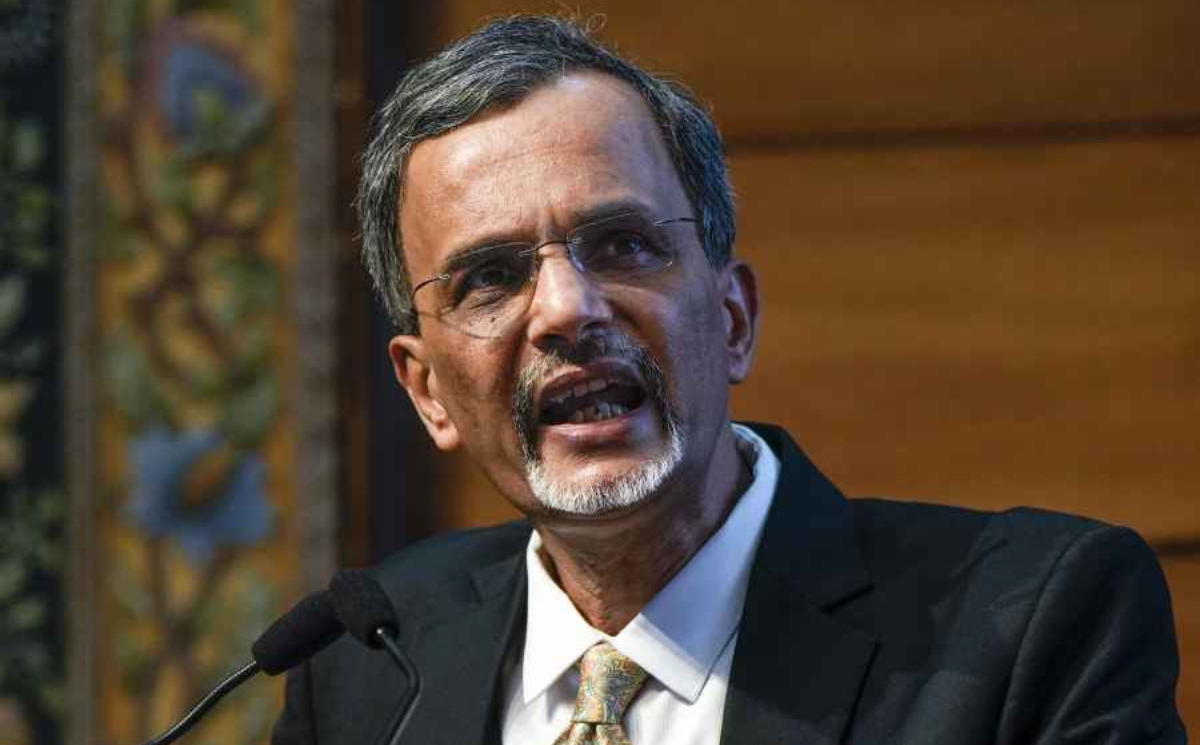
Chief Economic Adviser V Anantha Nageswaran has proposed bringing back E10 petrol for older two-wheelers alongside E20, while cautioning against increasing ethanol blending without first assessing its wider impact on food, agriculture and water resources.
In a column published in The Indian Express, Nageswaran and Department of Economic Affairs consultant Akash Poojari argued that India’s ethanol policy needs to look beyond the technical performance of E20. They said any move towards higher blends such as E27 or E30 must consider how much agricultural land and water would be required to produce the additional ethanol.
Stay Connected · Headline8
Get breaking news instantly — follow our official channels
Food vs Fuel Trade-Off
India achieved its 20% ethanol-blending target ahead of schedule, with the government highlighting reduced crude oil imports, foreign-exchange savings and additional markets for farmers as key benefits.
However, greater ethanol production also increases demand for feedstocks such as sugarcane, maize, rice and other grains. The authors particularly highlighted maize because it is not only used for ethanol but is also an important source of poultry and livestock feed.
Higher demand from ethanol producers could therefore influence crop prices and farming patterns, potentially creating competition between fuel production and food and feed requirements.
The authors have warned that moving beyond E20 without accounting for these competing demands could eventually result in fuel production crowding out food uses.
Water Use Adds Another Concern
The debate also extends to water consumption. According to the authors, policymakers should assess not only the water used at ethanol plants but also the water required to grow the crops used as feedstock.
This is particularly relevant to sugarcane, which requires substantial amounts of water. They cautioned that once agricultural land, water resources and cropping patterns become closely tied to fuel production, reversing those decisions could be difficult.
Why E10 Could Return for Older Vehicles
The immediate recommendation from Nageswaran and Poojari is to offer E10 petrol to older vehicles, particularly two-wheelers manufactured before BS-IV emission standards that use carburettors.
They estimate that around 75 million to 80 million older two-wheelers of this kind are still on Indian roads.
The authors explained that carburettor-equipped engines cannot automatically adjust the air-fuel mixture to account for the additional oxygen associated with higher ethanol blends. This could potentially cause engines to operate with a leaner mixture and run hotter. Older rubber components may also be less compatible with ethanol.
While retrofitting such vehicles with ethanol-compatible components is possible, upgrading tens of millions of vehicles would take considerable time. Restoring E10 as an option could therefore provide a lower-blend alternative while the transition takes place.
Government Continues to Back E20
The government has defended E20 petrol, pointing to extensive testing and the benefits of reducing dependence on imported crude oil. It has also maintained that there is currently no decision to move beyond the 20% blending level.
The CEA’s proposal does not reject the advantages of ethanol blending. Instead, it calls for a broader assessment of the costs involved before India considers higher targets.
The debate is therefore shifting from simply asking whether E20 is suitable for vehicles to a larger economic question: how much land, water and agricultural production should India commit to fuel when those resources also support food and livestock feed?
For older vehicle owners, the proposed solution is a return to E10. For the wider ethanol programme, the message is one of caution—evaluate the food, feed and water trade-offs before going beyond E20.
(Inputs from INDIA TODAY)
Edited by: Moonmoon Borah